Atlanta Billboard Hot Spots: Where Traffic Actually Stops in 2026
By Joe DiRico | 2026-02-09T11:24:30.424Z
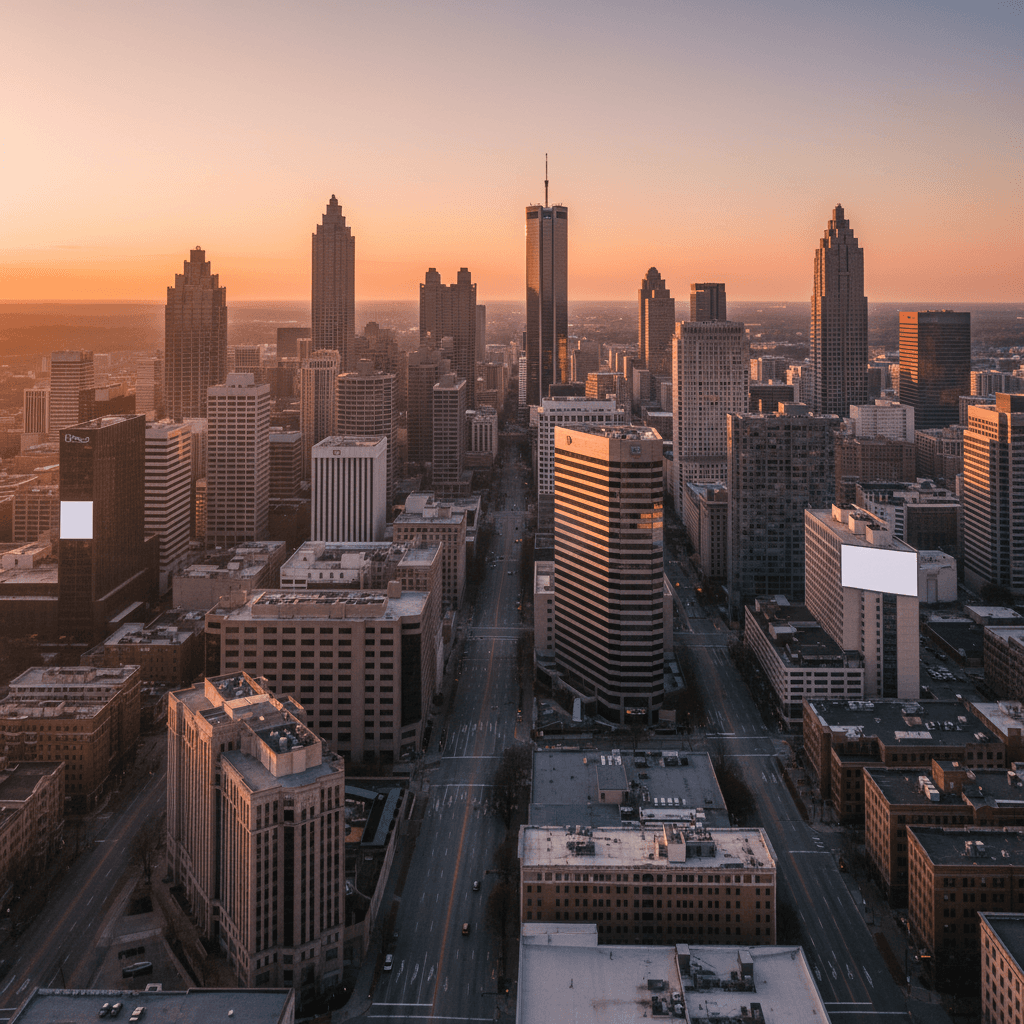
BeltLine Foot Traffic Beats Car Traffic Every Time
Everyone thinks billboards are about cars, but Atlanta's BeltLine proved us wrong. We placed an LED truck near Ponce City Market on a Friday afternoon and watched something magical happen. Office workers streamed out for lunch breaks, families pushed strollers toward Krog Street Market, and tourists stopped to take photos.
The foot traffic never stopped. This stretch between Ponce City Market and Krog Street Market grew 12% last year while the rest of the city managed just 6%. Your audience isn't driving past at 50 mph here - they're walking, stopping, and actually reading your message.
Peachtree Street's Sweet Spot: When 16,000 Cars Crawl
Peachtree Street feels like a racetrack until traffic hits. That's your moment. We learned this watching 16,000 cars daily crawl through the Midtown to Buckhead corridor. Morning rush creates a captive audience from 7:15 to 8:45 AM, but evening rush is pure gold.
Cars sit in traffic for 90 minutes heading north, giving you extended face time with commuters who have nowhere else to look. The secret isn't placing ads where cars speed past - it's finding the bottlenecks where they're forced to slow down.
Game Days Don't Kill Your Campaign
Game days should destroy Atlanta traffic, but Mercedes-Benz Stadium only increases congestion by 12%. That's the lowest disruption rate among 30 major US venues, which means your billboard still works when 70,000 people flood downtown.
The real opportunity comes from audience quality, not quantity. These aren't locals running errands - they're visitors with money to spend, tourists exploring the city, and fans in a spending mood. Dragon Con weekend brings 80,000 attendees who actually want to discover local businesses.
College Campuses Go Dead in Summer
We blew $10,000 on a summer campaign targeting Georgia Tech students and got schooled hard. College advertising dies completely when students leave for break. Georgia Tech's campus buzzes with foot traffic during the academic year, but come June, those 20,000 students disappear overnight.
GSU downtown and Emory in Druid Hills work exactly the same way. Go aggressive from August through May when students pack the walkways. Summer turns these campuses into deserted wastelands where marketing dollars vanish, unless you're chasing incoming freshmen during orientation week.
Mobile LED trucks run $1,800 to $3,000 per day, giving you the freedom to follow Atlanta's morning and evening traffic flows instead of staying locked into one location. Time your billboard campaign around peak commute hours and your investment pays for itself through smart positioning that moves with your audience.